Link copied
The Federal Reserve in 2026: What Every Investor Must Know Right Now.
watchlist :: 5hrs ago :: source - investorshd
By Ijlal Ahmed | InvestorsHD
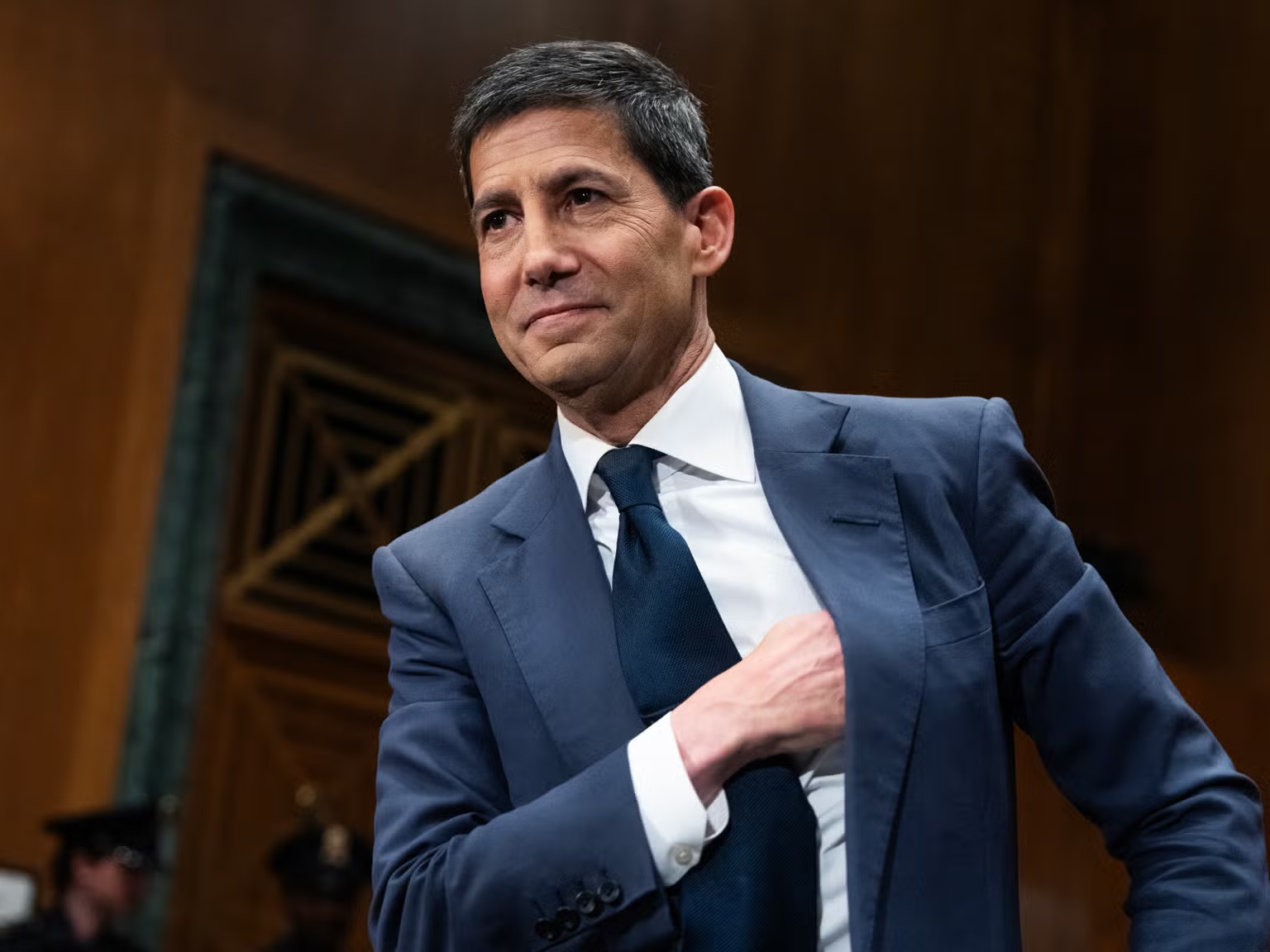 US Fed Chair Kevin Warsh / Tom Williams via Getty Images
The Federal Reserve in 2026: What Every Investor Must Know Right Now
No institution moves global financial markets more consistently than the United States Federal Reserve. Its decisions on interest rates ripple across stocks, bonds, crypto, real estate, and currencies — touching every investor on the planet. In 2026, the Fed has entered a pivotal new chapter: a historic leadership transition has just concluded, inflation remains stubbornly above target, and geopolitical tensions are clouding the economic outlook. Here is everything you need to understand about the Fed in 2026 — and exactly how it affects your money.
Where Interest Rates Stand Today
The Federal Reserve held its benchmark federal funds rate steady at 3.50%–3.75% at its April 28–29, 2026 meeting — the third consecutive meeting without a change. This follows three consecutive rate cuts in late 2025, which brought rates down from their peak. According to the official FOMC minutes, the Board of Governors voted unanimously to maintain the interest rate paid on reserve balances at 3.65%, with the primary credit rate remaining at 3.75%.
The Fed's next scheduled meeting is June 16–17, 2026 — the first meeting to be chaired by the newly confirmed Kevin Warsh. Markets are watching this closely. According to CME FedWatch, there is a 97% chance rates will remain unchanged at the June meeting, with most analysts expecting the Fed to hold at 3.50%–3.75% for the remainder of 2026.
The Leadership Transition: Kevin Warsh Is the New Fed Chair
The most significant development at the Federal Reserve in 2026 is the confirmed appointment of Kevin Warsh as the 17th Chair of the Federal Reserve. President Donald Trump nominated Warsh on March 4, 2026. The Senate confirmed him on May 13, 2026, in a 54–45 vote — the most divisive confirmation vote for a Fed chair in modern history. Warsh officially assumed the chairmanship on May 22, 2026, succeeding Jerome Powell, who served two terms since 2018.
Warsh, 56, brings a distinctive background to the role. He previously served on the Federal Reserve Board of Governors from 2006 to 2011, sitting alongside then-Chair Ben Bernanke during the 2008 financial crisis. After leaving the Fed, he became a partner at Duquesne Family Office and a visiting fellow in economics at Stanford University's Hoover Institution. He holds a degree in public policy from Stanford and a law degree from Harvard.
What does Warsh's appointment mean for markets? Warsh has been a consistent advocate for lower interest rates and has been critical of the Fed's expanded balance sheet. President Trump, who has repeatedly clashed with Jerome Powell over rate policy, expects Warsh to cut rates faster. However, with inflation still above the Fed's 2% target — driven partly by surging oil prices — Warsh faces significant constraints on how quickly he can deliver cuts without reigniting inflation.
Why the Fed Remains in Wait-and-See Mode
Despite the change in leadership, the Fed remains cautious. Inflation is still well above the 2% target — the consumer price index rose 0.9% in March and 0.6% in April on a monthly basis, driven largely by elevated energy prices linked to Middle East tensions. The labor market has also softened, with job gains slowing throughout early 2026. This combination of stubborn inflation and weakening growth has put the Fed in a difficult position, making aggressive rate cuts risky despite political pressure to act.
How Fed Decisions Affect Your Investments
Stocks:
Warsh's preference for rate cuts is broadly positive for equities — particularly growth stocks and tech — if he can deliver cuts without triggering inflation. However, in the near term, rates are expected to hold, keeping pressure on valuations. Value stocks and dividend-paying companies continue to perform relatively better in this higher-for-longer environment.
Bonds:
Bond markets are closely watching Warsh's first moves as Chair. If he signals faster rate cuts, bond prices will rally. If inflation data forces him to hold or even hike, bonds will face further pressure. Short-duration Treasuries remain the safer play until the direction becomes clearer.
Crypto:
Crypto markets are highly sensitive to Fed policy signals. Warsh's dovish reputation — and Trump's expectation of rate cuts — has been broadly positive for Bitcoin and Ethereum sentiment. Any concrete move toward rate cuts from Warsh could trigger a significant crypto rally.
Real Estate:
Mortgage rates remain elevated, keeping housing affordability stretched. Warsh's appointment has raised hopes among homebuyers for eventual rate relief — but with inflation still hot, meaningful cuts remain months away at minimum.
Key Things to Watch at Warsh's First Fed Meeting — June 16–17
Warsh's tone: His first press conference as Chair will be closely scrutinized for signals on the pace of future rate cuts.
Inflation data: If May inflation comes in below expectations, a rate cut in July or September becomes more likely.
Jobs report: Continued weakness in job gains increases pressure on Warsh to cut sooner.
Oil prices: If Middle East tensions ease and oil falls, inflation pressure reduces — giving Warsh more room to cut.
Fed independence signals: Markets will watch closely whether Warsh acts independently or appears to follow Trump's political direction on rate cuts.
What Should Investors Do Right Now?
The arrival of Kevin Warsh as Fed Chair marks a genuine inflection point for global markets. His dovish instincts and Trump's pressure for lower rates create a favorable long-term backdrop for risk assets including stocks and crypto. However, persistent inflation means any cuts will come gradually. The smartest move right now is to position your portfolio for a rate-cutting cycle that is coming — but not yet here. Hold short-duration bonds for stability, maintain exposure to quality growth stocks, keep gold as an inflation hedge, and consider a measured crypto allocation to benefit from the eventual monetary easing. Stay patient, stay informed, and watch Warsh's June 16–17 debut very closely.
Sources
1. Kevin Warsh Takes Oath as Fed Chair — Federal Reserve Official Release.
2. Kevin Warsh Confirmed as Fed Chair — CNBC.
3. What Kevin Warsh Means for Markets — J.P. Morgan Chase: chase.com.
4. Kevin Warsh Confirmed Amid Controversy — Al Jazeera.
5. Senate Confirms Kevin Warsh as Fed Chair — NPR.
Risk Disclaimer
This article is for informational and educational purposes only and does not constitute financial, investment, or trading advice. All investments carry risk, including the possible loss of principal. Past performance is not indicative of future results. Federal Reserve decisions and market conditions can change rapidly. Always conduct your own research and consult a qualified financial advisor before making any investment decisions. The author and InvestorsHD are not responsible for any financial losses based on the information provided in this article.
This week top market trends.
-
Wall Street awaits GameStop CEO Cohen's next move after eBay rejected takeover bid
2026-05-27 :: watchlist :: reuters -
Global bonds tumble as flaring inflation spooks investors
2026-05-15 :: treasuries & bonds :: reuters -
Trump Pauses Plan to Guide Ships While Seeking Iran Deal
2026-05-06 :: watchlist :: bloomberg
Recent global market news
-

These bitcoin metrics suggest February’s $60,000 selloff may have marked the bottom
2026-05-20 :: :: coindesk -

5 Essential Financial Tips to Help You Avoid Outliving Your Retirement Savings
2026-05-28 :: :: investopedia -
Snowflake boosts forecast, signs $6 billion AWS deal as enterprise AI adoption grows
2026-05-28 :: :: reuters